ISO Certification in Dubai: The Complete Guide
Wiki Article
The Reason Uae Businesses Are Hurrying To Get Iso Certified In 2026
Just walk into any procurement conversation in the UAE at present, and ISO certification will be mentioned within a matter minutes. What was once a nice thing to have for larger corporations has evolved into a normal expectation for everyone in construction, logistics, healthcare and food production technology. The rate at which local companies are in pursuit of certification has increased significantly over the last couple of years.Government contracts are driving much of the Demand
A large share of the present push comes from government and semi-government tendering requirements. Most public sector contracts in the Emirates include a valid ISO certificate as a mandatory prequalification documentation rather than an optional extra, which is why companies that do not have one are basically excluded from tendering before the price or capabilities even enter discussions.
International Trade Partners Expect It as Standard
The UAE's position as a regional trade and logistics hub means that a large portion of local businesses interact with international partners. The partners increasingly treat ISO certification as an essential quality of service rather than an differentiation. When a European or North American buyer evaluating a vendor based in UAE tends to narrow their choices depending on whether an internationally recognized management system certification has been issued, since it provides them with a reliable source of information regardless of how well they comprehend the local market.
Free Zones are actively encouraging certification
A few of the biggest UAE free zones have started promoting certification as part of the business setup packages, recognising that certified tenants are more likely to get better clients and are more successful in expanding. This formal encouragement, coupled with a real pressure to compete, has made certification an issue of specialized considerations to something that is more similar to the standard of business hygiene.
Risk and Insurance Considerations are Affiliating a Growing Role
Insurance companies in the UAE Market are increasingly taking into account management system certification into their risk assessment, especially in the fields of manufacturing and construction where the failure to maintain safety and quality can result in significant liability risk. A certification of a safety or quality management system gives insurers an evidence-based basis for rate of risk and many offer more favorable conditions to applicants who have been certified because of it.
The Cost of Certifications Has come down
A heightened competition between certification organizations and consultants working in the UAE has reduced the cost considerably in comparison to a decade ago, making certification accessible to small and medium-sized firms that had thought it was only within reach for larger corporates. This change in cost has opened the door to a wider array of businesses seeking certification first time.
Different Standards Suit Different Businesses
Each business may not need the same certificate and figuring out which one is in fact the first obstacle. Construction companies' priorities in safety management differ when compared to a software organization's concerns in terms of security for information. This is why there is a growing demand across a wide range of standards rather than concentrating on only one.
What This Means for Businesses Still in the Dark
For businesses still considering whether certification is worth the effort however, the actual reality for 2026 is the fact that the debate has shifted from whether or not competitors have it, to how many small opportunities are being left without certification. The typical process begins by conducting a gap study against the relevant standard. It's and then a well-planned time frame for implementation before an external audit. And the whole process is considerably more approachable than it was even five years ago.
The Talent Market Is Not Responding Enough
In the past few years, certification has become important in how UAE businesses conduct their business, there is a real local talent marketplace has developed around quality environmental and safety management tasks, with more professionals having lead auditors with recognized credentials for implementation than in the past. This has made it much easier for companies to bring on internal personnel that are able to manage any management system even until the first certification program end, instead of being dependent entirely on external experts for the duration of time.
Multinational Companies Set the Regional Tone
Many multinationals operating locally or with Middle East headquarters out of the UAE bring existing global certification requirements with them, and demand local suppliers and partners to adhere to similar standards. The result is a dramatic knock-on effect, since local businesses who provide to these supply chains by multinational companies frequently encounter certification requirements which cascade down from client expectations that originated well outside the UAE in the UAE itself.
It is increasingly being viewed as a Growth Enabler, Not just Compliance
Perhaps the most significant change on the subject over the past few years is that more UAE businesses are now viewing certification as a tool that assists growth, by opening opportunities for tender eligibility as well as international partnership opportunities, rather than treating it solely as the cost of compliance to be used for defensive purposes. This has made the purchase much more feasible to justify internally, since it connects directly to revenue opportunities, instead of merely being part of the budget for compliance.
What can we expect in the coming years? Ahead
In light of the current situation it is reasonable to believe that ISO certification to move from being a competitive advantage toward an outright access to markets requirement across an increasing range of UAE sectors over the coming years. Companies who are ahead of this trend now instead of not waiting until it becomes necessary to obtain certification, generally feel the process is less stressful, and their competitive position is much stronger.
What is the length of time it takes to complete the whole process? Typically Takes
The entire process beginning with the gap assessment and ending with the certificate issuing process typically takes from 3 to 9 months depending on business size as well as the current maturity of the process and the speed at which internal teams can take on necessary adjustments. Companies with a real need to be on time will often attempt to shorten this duration significantly, however, rushing the implementation phase tends to make a management system which isn't able to perform at the initial audit, which makes a reasonable timeline a genuinely worthwhile investment.
In the end ISO certifications across the UAE has been a reflection of a marketplace that has matured past treating safety and quality management as an internal preference and now considers it the fundamental element to doing business with a serious attitude, both locally and internationally. For any company looking to start, the practical next thing to do is have a brief and open conversation with a reputable certification body or an reputable consultant about which ISO standard matches current processes and customer expectations, not merely guessing just based on what the competitor will display on their websites. There are no signs of slowing down making the current day a very sensible moment for companies still contemplating certifications to go from contemplation to decision. View the top rated ISO 20000 Certification for more examples.
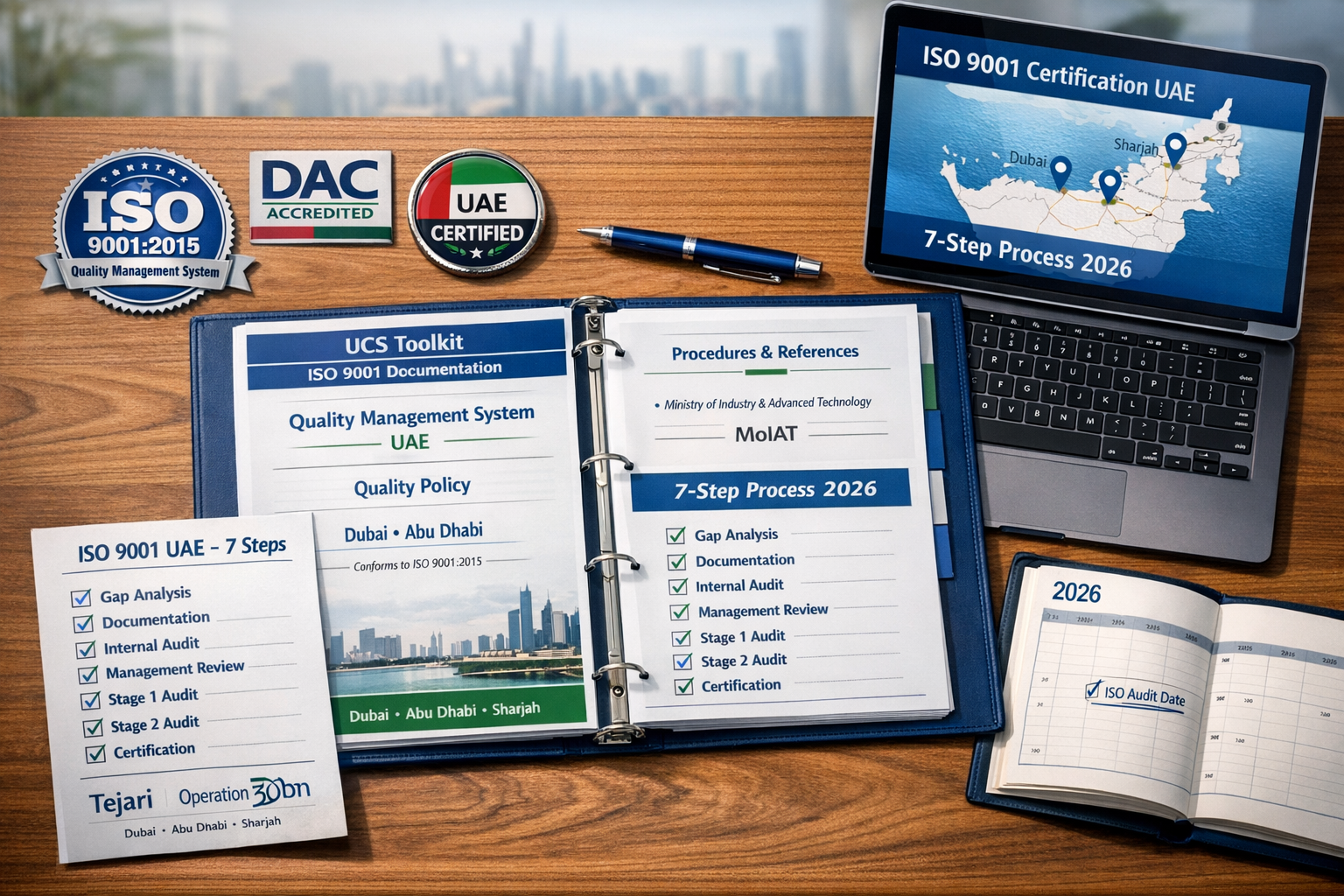
ISO 9001 Explained: Quality Management for UAE Businesses
ISO 9001 remains the most widely recognised management system standard globally, and with good reason. It is based on a practical idea, that consistent quality comes from consistent, effectively managed processes instead of good intentions by themselves. For UAE companies that are considering certification, understanding what the standard actually asks for will help clear up the process which often seems more complex than it is.What ISO 9001 Is Actually is Built Around
It is at the core of it all. ISO 9001 asks a business to define its key processes and then understand how they work in order to determine if they're effective, and to improve them continuously in time. Rather than prescribing exactly how the business should be run but rather, it gives a guideline for ensuring that every approach an organization adopts should be logical, documented when required, and actually followed.
What is the reason UAE Businesses Enroll in It?
Beyond the prestige of accreditation, a majority of UAE businesses seek ISO 9001 because government and private sector tenders increasingly list it as an essential prequalification requirement. Beyond that companies that use it in a proper manner often experience real efficiency benefits. This includes fewer frequent mistakes, more transparent accountability and a more disciplined process for dealing with complaints from customers.
The Role of Top Management
The one area that the standard is specifically clear on is leadership involvement rather than quality management being entrusted to one compliance person who is not separated from the actual decisions. Auditors look for evidence that the senior management team understands and actively promotes the quality management process, rather than simply signing off on it.
Risk-Based Thinking Is Central to the Modern Standard
The current edition of ISO 9001 places considerable emphasis on identifying risks and opportunities relevant to a business's specific circumstances, as opposed to applying a generic checklist regardless of the circumstances. This means a UAE construction company as well as an UAE software company, although both certifying against the same standard can end up having distinctively different quality control systems that reflect their unique risk profiles.
Customer Focus runs throughout the Standard
ISO 9001 repeatedly returns to the idea that quality involves meeting the customer's requirements and needs, not only internal efficiency measures. Businesses who comply with the standard expected to employ genuine processes to comprehend what customers need and measuring whether they're satisfied, rather than assuming internal quality checks will be able to provide the full picture.
The Certification Process Itself
After implementing the necessary processes and documentation, certification is an external inspection that occurs in two stages. The first step is to review documentation and readiness, then making sure that the system in fact operating as stated. It is followed with annual checks of surveillance, as well as a annual recertification audit about every three years, to check that the system is in constant compliance.
Common Misconceptions That Need To Be Dispelled
A common misconception is ISO 9001 requires enormous volumes of documentation, but the new version has actually decreased the need for documentation considerably compared with older versions, focusing more in demonstrating true process control. Another misperception is that certification guarantees product quality directly, when in fact it confirms that businesses have a consistent procedure for managing quality and is a fundamentally different but nonetheless a valuable aspect.
How Differently It is Applied Across Industries
A construction company that is implementing ISO 9001 will focus heavily on project handover processes and managing subcontractors, whereas a professional services firm could concentrate more on processes for engaging clients and management of knowledge. This standard's versatility across all sectors is why it's still relevant in a wide range of UAE industries, from manufacturing through to consulting and retail.
The Role of Continuous Improvement
ISO 9001 doesn't treat quality as a single goal rather as a continuous process of monitoring performance, identifying opportunities to make improvements, and implementing the changes gradually. Businesses that truly embrace this constant improvement approach, instead of focusing on certification as a singular event, generally see the greatest long-term operating benefits from ISO 9001.
How to Prepare Your Team to handle the Cultural Shift
One of the aspects that's most often ignored the process of ISO 9001 implementation is the significant cultural change required, changing from individual-driven, informal ways of working toward more organized, consistent processes that don't solely rely solely on a person's memory or judgement. The preparation of staff members for this shift and educating them on the practical benefits instead of just presenting it strictly as a compliance tool is a significant improvement in how smoothly implementation goes.
Why the Investment Tends to be a Success?
Businesses that implement ISO 9001 thoughtfully, rather then merely using it as document-related exercise meant to satisfy the external requirements, typically see the benefits by fewer repeat errors, increased accountability within the company, and a much stronger foundation for scalability as the company expands, with benefits that outlast the certificate its own.
Which Ways ISO 9001 Interacts With Customer Representations Specifically
The Norm requires that businesses maintain a well-organized, logical method for handling customer complaints and feedback. The standard requires businesses to view each complainant as a point of data that needs to be incorporated into improving the efficiency of the process rather than being ignored and forgotten. UAE businesses that design an effective feedback loop experience it becoming one of the most beneficial components of the management process in addition to its importance to meet the audit.
For UAE firms who are trying to decide if ISO 9001 is worth pursuing The real answer depends on whether they really want more effective, standardized processes. as the certification itself is more of a formalization of the fundamental operational discipline. For UAE firms that are committed to improving the way they work, rather than simply collecting the certificate, ISO 9001 offers a proven, internationally recognised procedure to make this improvement continuous, not accidental. It's not about abandoning what works within a business. ISO 9001 is fundamentally about formalising and strengthening good practice instead of replacing it with something completely unrelated. If it is approached this way the certification becomes an integral part of good management, not an additional burden placed on the company. It is, at the end of the day it's a framework built on general sense and a consistent application rather than something that is a mystery. That above all else, is the reason it deserves taking seriously. Few investments offer as large, long-lasting value. The time and effort it takes to find the best. View the best ISO 27001 Certification for site recommendations.